

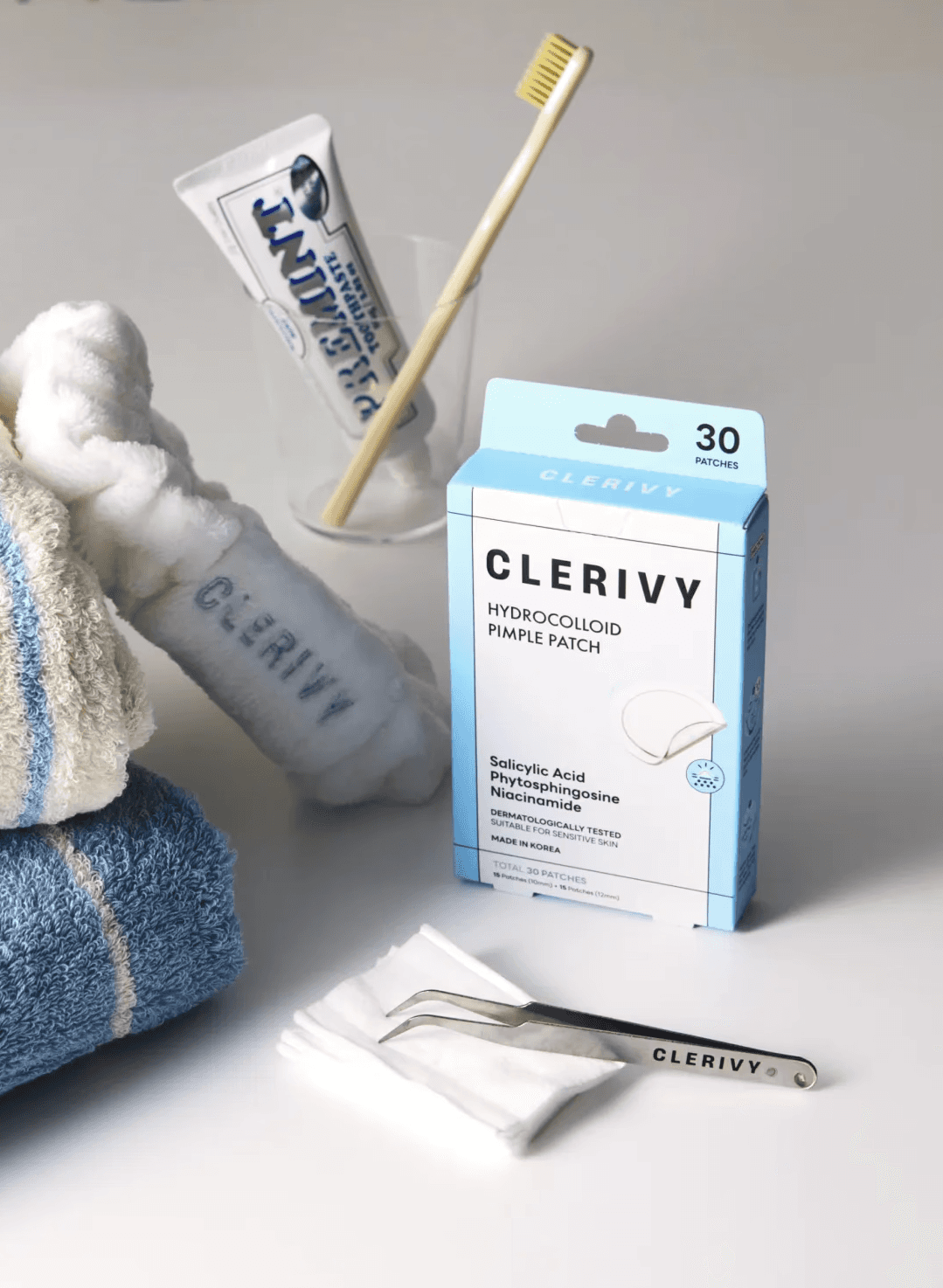


PIMPLE PATCH GUIDES
Explore clear guides to choosing and using hydrocolloid and microdart pimple patches.

A Closer Look at Our Patch Testing
Explore six CLERIVY patch studies, including sensitive-skin, non-comedogenic, and 24-hour skin response testing, with methods and findings for each product.
VIEW MORE
When to Use Each Pimple Patch
Choose a CLERIVY patch for the spot you have: Microdart for an early bump or Hydrocolloid for a surfaced blemish. Compare formats, sizes, and wear times.
VIEW MORE
How to Choose Between 10 mm and 12 mm Patches
Every CLERIVY Hydrocolloid pack includes 10 mm and 12 mm patches. Learn how to choose a size that covers your spot and compare the three pack counts.
VIEW MORE
Can You Put a Pimple Patch on a Popped Pimple?
Learn when to skip a patch after popping a pimple, why skin must be healthy and intact, and how to use CLERIVY Hydrocolloid Pimple Patches for coverage.
VIEW MORE
How Pimple Patches Work
Learn how hydrocolloid and microdart patches work, which spot stage each suits, and how to use CLERIVY patches, with a closer look at product testing.
VIEW MORE
Microdart vs Microneedle Patches: What to Look For
Compare microdart and microneedle patch formats, then explore the 16 dissolving microdarts, formula, and two-step routine of CLERIVY Microdart Spot Patch.
VIEW MORE
Cosmetic Patch or Acne Drug? How to Read the Box
How to tell a cosmetic pimple patch from an OTC acne drug by intended use, Drug Facts, active ingredients, and product-specific CLERIVY labeling.
VIEW MORE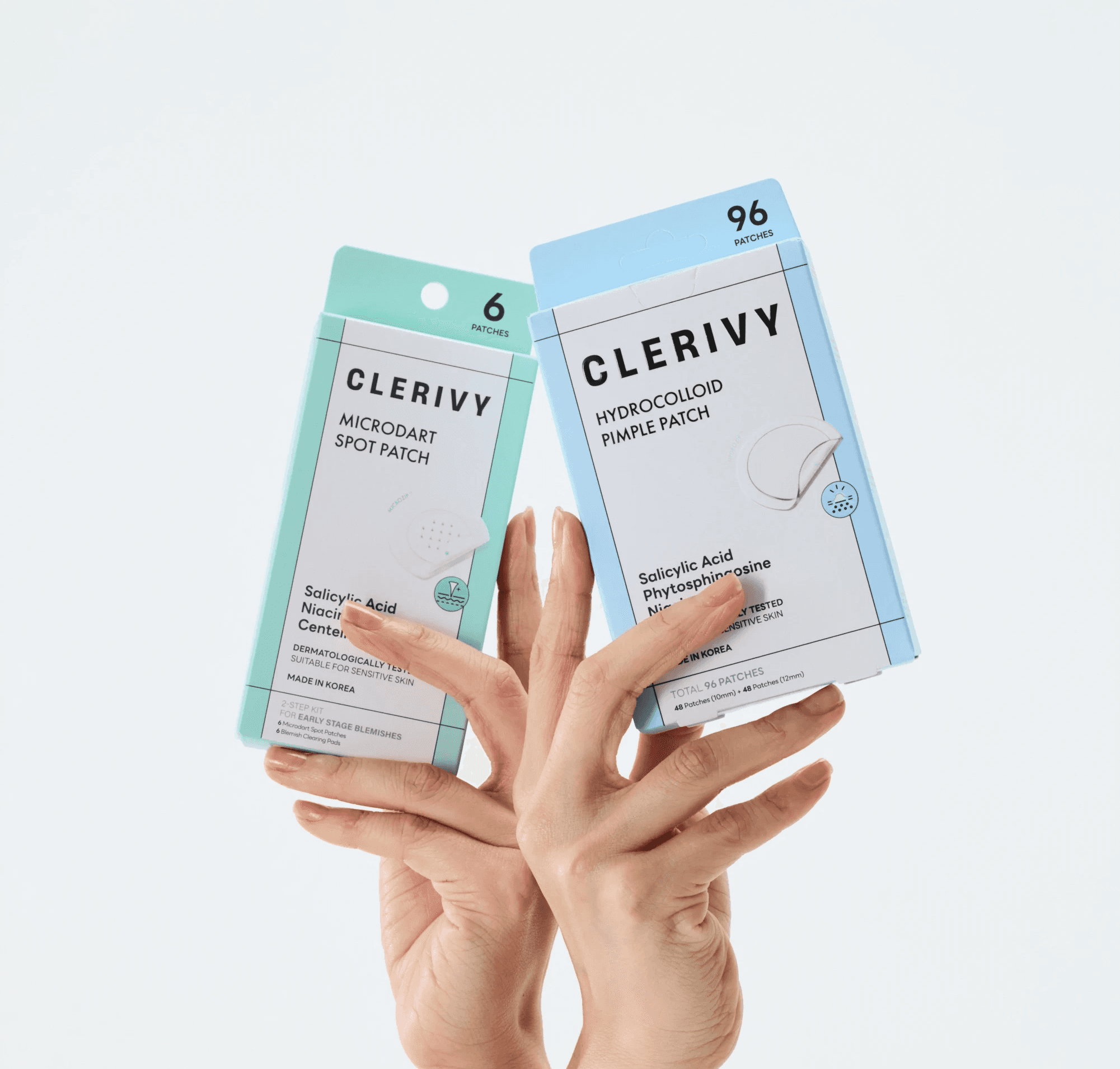
Hydrocolloid vs Microdart: Which Patch Do I Need?
Learn how hydrocolloid and microdart patches differ by spot stage, format, size, wear time, and pack count to choose the right CLERIVY patch.
VIEW MORE
Why Do Hydrocolloid Patches Turn White (Opaque)?
Why hydrocolloid patches turn white or opaque, what the change means, when to remove your patch, and what the color cannot tell you.
VIEW MORE


