

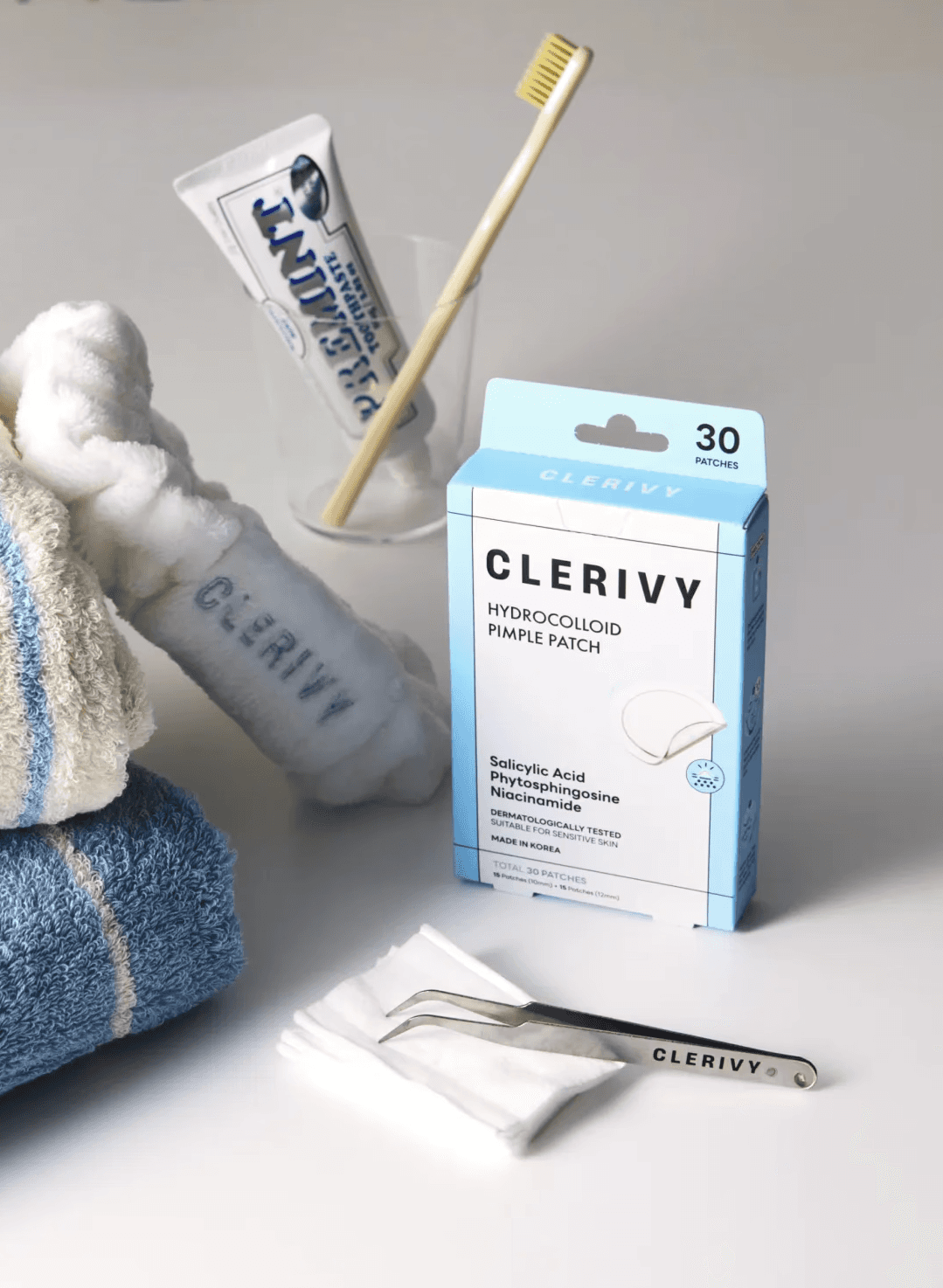


How Pimple Patches Work
- do-pimple-patches-work
Pimple patches offer targeted care for different stages of a spot. A hydrocolloid patch provides coverage for a surfaced blemish, creates a water-resistant barrier, and helps keep fingers away. A microdart patch uses fine dissolving points for an early bump you can feel before it surfaces.
Quick Facts
What they are | Cosmetic spot-care patches for different spot stages |
Hydrocolloid Pimple Patch | A translucent cover for a surfaced spot; 10 mm and 12 mm; wear for 4–8 hours, or until opaque |
Microdart Spot Patch | A two-step kit for an early bump; 16 dissolving microdarts; wear for at least 2 hours, and for best results leave it on overnight |
Do not use on | Open, wounded, or damaged skin |
How Does a Hydrocolloid Patch Work?
Hydrocolloid is a soft, gel-forming material that interacts with moisture. The CLERIVY Hydrocolloid Pimple Patch covers a surfaced spot and creates a water-resistant barrier while you wear it.
These translucent hydrocolloid patches provide targeted spot coverage, while salicylic acid, phytosphingosine, and niacinamide help calm and comfort the skin.
Every pack includes an equal split of 10 mm and 12 mm patches. Apply one to clean, completely dry, healthy, intact skin. Leave on for 4–8 hours, or until the patch turns opaque.
Can Pimple Patches Get Wet?
The CLERIVY Hydrocolloid Pimple Patch is water-resistant, not waterproof. Apply it to completely dry skin and follow its wear directions. The Microdart Spot Patch has a different format and its own directions.
Why Does a Hydrocolloid Patch Turn White?
The patch changes appearance as the hydrocolloid interacts with moisture. A white or opaque appearance is a cue to remove it, alongside the 4–8 hour wear time. The color change does not tell you how the spot will look after removal. Read more about why patches turn opaque.
How Does a Microdart Patch Work?
The CLERIVY Microdart Spot Patch is made for an early bump you can feel before it surfaces. Each 13.5 mm patch has 16 fine-tipped microdarts on the skin-facing side. Each tip features fast-release technology that delivers the formula beneath the skin’s surface as the microdart fully dissolves within 6 hours.
Panthenol, Cica, and Zinc PCA help skin feel soothed and comfortable.
Use the included Blemish Clearing Pad first and let the skin dry completely. Apply the patch and press firmly for 10 seconds. Leave on for at least 2 hours while the microdarts dissolve. For best results, leave it on overnight.
How Have CLERIVY Patches Been Tested?
Both cosmetic patch formats have been evaluated in one-week human-use studies:
Hydrocolloid Pimple Patch: sensitive-skin report CBRC-E-260610-52 (23 participants) and non-comedogenic report CBRC-E-260610-53 (22 participants).
Microdart Spot Patch: sensitive-skin report CBRC-E-260611-54 (23 participants) and non-comedogenic report CBRC-E-260611-55 (21 participants). Both evaluated the complete routine of Blemish Clearing Pad followed by patch.
No assessed adverse skin reactions were observed in the four studies. Each followed a single group for one week without a control group, so the findings describe that period of use. Individual responses may vary.
Explore the study methods, findings, and certification details for each product. The separate Hydrocolloid clinical results are available on its product page.
Choosing and Using Your Patch
Match the format to the spot you have and follow that product’s directions. Wear time tells you how long to use a patch; it does not predict when you will see a visible change.
Product | Spot stage | Wear direction |
|---|---|---|
Hydrocolloid Pimple Patch | Surfaced spot on healthy, intact skin | 4–8 hours, or until opaque |
Microdart Spot Patch | Early bump you can feel before it surfaces | At least 2 hours; for best results, overnight |
Use both cosmetic patches only on healthy, intact skin. Do not apply them to open, wounded, or damaged areas. For more help choosing, see Hydrocolloid vs Microdart.
The Microdart Acne Patch is a separate OTC acne drug with 2% salicylic acid and its own Drug Facts. Follow that product’s labeling for its uses and directions.
Related Reading
Sources
CLERIVY on-pack functions, directions, cautions, and ingredient lists (2026)
Human-use reports CBRC-E-260610-52, CBRC-E-260610-53, CBRC-E-260611-54, and CBRC-E-260611-55, Cutis Biomedical Research Center, August 2026
CLERIVY Hydrocolloid Pimple Patch and Microdart Spot Patch are cosmetic products. They are not intended to treat, prevent, or cure acne or any other medical condition.
Last updated: September 6, 2026


