CLERIVY
  • Patch Guide

Not "Which Patch Is Better", It's "When Do I Use Each One?"


People ask us which of our two patches is better. Honest answer: neither. They're built for different moments. There's a stage where nothing shows on the surface yet, but your fingertip finds a small bump. That's Microdart territory. Then there's the stage after, when the spot has surfaced and you can see it in the mirror. That's what the Hydrocolloid patch is for.

Quick Facts


Microdart Spot Patch

Hydrocolloid Pimple Patch

The stage

The early bump you can feel, before it surfaces

The spot that has surfaced and is visible

Format

16 dissolving microdarts per 13.5 mm patch

Translucent hydrocolloid with a water-resistant barrier

Routine

Two-step cosmetic kit: Blemish Clearing Pad, then patch

Single patch

Wear

Press firmly for 10 seconds, then leave on for 2+ hours. We recommend overnight.

4–8 hours, or until the patch turns opaque

Sizes and counts

13.5 mm / 6, 12, or 18 count

10 mm and 12 mm in every pack / 30, 72, or 96 count

The Moment You Feel It Before You See It

A patch is usually the first thing people reach for when a spot shows up. But "shows up" happens twice: once under your fingertip, and once in the mirror. Should the same patch handle both? We built CLERIVY around the answer, which is no.

The first arrival is quiet. Nothing's visible yet, but your fingertip finds a small, firm bump under the skin. The second one is the arrival everybody knows: the spot has surfaced, and the mirror confirms it. Two different moments asking for two different things, which is why CLERIVY makes two patches instead of asking one format to do every job.

Before It Surfaces: Microdart Spot Patch

Instead of a flat surface, this patch carries 16 fine dissolving microdarts that sit tight against the spot you can feel. The darts are built on Sodium Hyaluronate and carry 7% Niacinamide and 3% Tranexamic Acid, with Panthenol, Madecassoside, and Zinc PCA in the formula. The carton lists tone care as the third function.

It's a two-step routine: prep with the Blemish Clearing Pad, then apply the patch. Press firmly for 10 seconds and leave it on for at least 2 hours. We recommend overnight. The darts are pin-sized points that dissolve once the patch is on. Each patch is 13.5 mm, and the kit comes in 6, 12, and 18 count.

Once It Has Surfaced: Hydrocolloid Pimple Patch

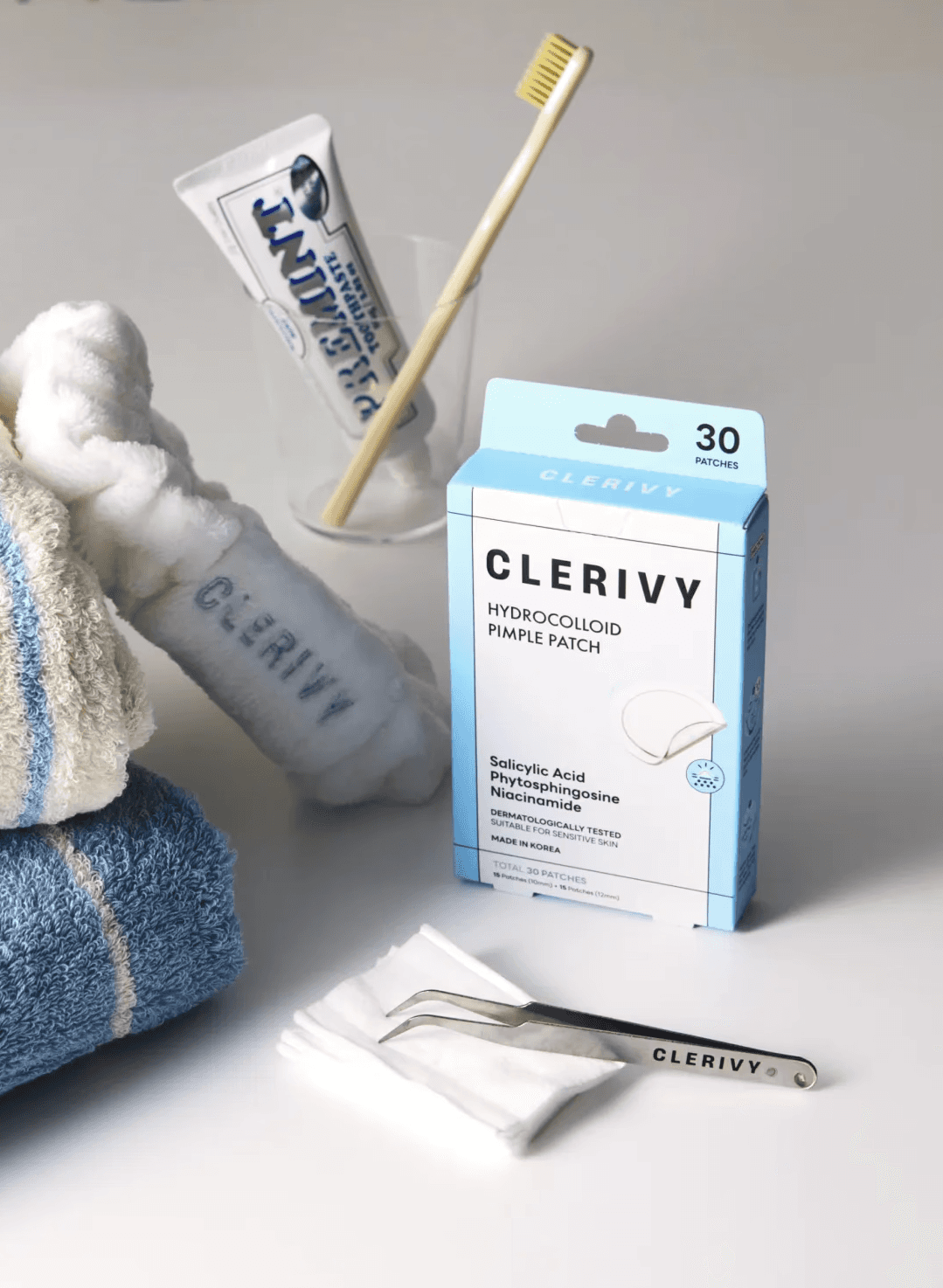
The job changes once a spot is visible. Now it needs covering: a translucent hydrocolloid layer with a water-resistant barrier, built to be worn through a school day or an office day without drawing attention. Every pack has two sizes, 10 mm and 12 mm, so you're not stretching one size over every spot. The formula includes Phytosphingosine, Panthenol, and Allantoin, along with Salicylic Acid at under 0.5%.

Wear is simple. Leave it on for 4 to 8 hours, or until the patch turns opaque. Every pack splits the two sizes evenly: 15 and 15 in the 30 count, 36 and 36 in the 72 count, 48 and 48 in the 96 count.

So Which One Do You Buy?

If your spots tend to get caught at the fingertip stage, start with the Microdart kit. If they tend to show up already surfaced, start with Hydrocolloid. A lot of people end up keeping both, not because one fell short, but because blemishes don't all arrive at the same stage.

For a side-by-side breakdown of the two formats, see Hydrocolloid vs Microdart.

Can I Use Both Patches?

Yes. They're made for different stages, not for competing uses. Use the Microdart Spot Patch on an early bump you can feel, and the Hydrocolloid Pimple Patch on a spot that's already surfaced. If you've got both kinds at once, use each format on the spot that matches its stage.

When Is a Patch Not the Answer?

An honest guide has to include this part. CLERIVY patches aren't for open or damaged skin, so follow the cautions printed on each pack and give freshly broken skin time before a patch goes anywhere near it. Both patches are cosmetic products, and the disclaimer at the bottom of this page is the full extent of what they claim. And if a spot keeps coming back or gets worse, that's a question for a professional, not a patch.

Related

Sources

  • CLERIVY on-pack FUNCTIONS, DIRECTIONS, and INGREDIENTS panels (carton, 2026)

  • CLERIVY full ingredient lists (INCI)

CLERIVY Hydrocolloid Pimple Patch and Microdart Spot Patch are cosmetic products. They are not intended to treat, prevent, or cure acne or any other medical condition.

Last updated: August 20, 2026

  • Patch Guide

Not "Which Patch Is Better", It's "When Do I Use Each One?"


People ask us which of our two patches is better. Honest answer: neither. They're built for different moments. There's a stage where nothing shows on the surface yet, but your fingertip finds a small bump. That's Microdart territory. Then there's the stage after, when the spot has surfaced and you can see it in the mirror. That's what the Hydrocolloid patch is for.

Quick Facts


Microdart Spot Patch

Hydrocolloid Pimple Patch

The stage

The early bump you can feel, before it surfaces

The spot that has surfaced and is visible

Format

16 dissolving microdarts per 13.5 mm patch

Translucent hydrocolloid with a water-resistant barrier

Routine

Two-step cosmetic kit: Blemish Clearing Pad, then patch

Single patch

Wear

Press firmly for 10 seconds, then leave on for 2+ hours. We recommend overnight.

4–8 hours, or until the patch turns opaque

Sizes and counts

13.5 mm / 6, 12, or 18 count

10 mm and 12 mm in every pack / 30, 72, or 96 count

The Moment You Feel It Before You See It

A patch is usually the first thing people reach for when a spot shows up. But "shows up" happens twice: once under your fingertip, and once in the mirror. Should the same patch handle both? We built CLERIVY around the answer, which is no.

The first arrival is quiet. Nothing's visible yet, but your fingertip finds a small, firm bump under the skin. The second one is the arrival everybody knows: the spot has surfaced, and the mirror confirms it. Two different moments asking for two different things, which is why CLERIVY makes two patches instead of asking one format to do every job.

Before It Surfaces: Microdart Spot Patch

Instead of a flat surface, this patch carries 16 fine dissolving microdarts that sit tight against the spot you can feel. The darts are built on Sodium Hyaluronate and carry 7% Niacinamide and 3% Tranexamic Acid, with Panthenol, Madecassoside, and Zinc PCA in the formula. The carton lists tone care as the third function.

It's a two-step routine: prep with the Blemish Clearing Pad, then apply the patch. Press firmly for 10 seconds and leave it on for at least 2 hours. We recommend overnight. The darts are pin-sized points that dissolve once the patch is on. Each patch is 13.5 mm, and the kit comes in 6, 12, and 18 count.

Once It Has Surfaced: Hydrocolloid Pimple Patch

The job changes once a spot is visible. Now it needs covering: a translucent hydrocolloid layer with a water-resistant barrier, built to be worn through a school day or an office day without drawing attention. Every pack has two sizes, 10 mm and 12 mm, so you're not stretching one size over every spot. The formula includes Phytosphingosine, Panthenol, and Allantoin, along with Salicylic Acid at under 0.5%.

Wear is simple. Leave it on for 4 to 8 hours, or until the patch turns opaque. Every pack splits the two sizes evenly: 15 and 15 in the 30 count, 36 and 36 in the 72 count, 48 and 48 in the 96 count.

So Which One Do You Buy?

If your spots tend to get caught at the fingertip stage, start with the Microdart kit. If they tend to show up already surfaced, start with Hydrocolloid. A lot of people end up keeping both, not because one fell short, but because blemishes don't all arrive at the same stage.

For a side-by-side breakdown of the two formats, see Hydrocolloid vs Microdart.

Can I Use Both Patches?

Yes. They're made for different stages, not for competing uses. Use the Microdart Spot Patch on an early bump you can feel, and the Hydrocolloid Pimple Patch on a spot that's already surfaced. If you've got both kinds at once, use each format on the spot that matches its stage.

When Is a Patch Not the Answer?

An honest guide has to include this part. CLERIVY patches aren't for open or damaged skin, so follow the cautions printed on each pack and give freshly broken skin time before a patch goes anywhere near it. Both patches are cosmetic products, and the disclaimer at the bottom of this page is the full extent of what they claim. And if a spot keeps coming back or gets worse, that's a question for a professional, not a patch.

Related

Sources

  • CLERIVY on-pack FUNCTIONS, DIRECTIONS, and INGREDIENTS panels (carton, 2026)

  • CLERIVY full ingredient lists (INCI)

CLERIVY Hydrocolloid Pimple Patch and Microdart Spot Patch are cosmetic products. They are not intended to treat, prevent, or cure acne or any other medical condition.

Last updated: August 20, 2026

SIGN UP FOR EXCLUSIVE UPDATES, NEW ARRIVALS & INSIDER ONLY DISCOUNTS

SIGN UP FOR EXCLUSIVE UPDATES, NEW ARRIVALS & INSIDER ONLY DISCOUNTS

© GUHADA Co., Ltd. 2026

© GUHADA Co., Ltd. 2026